Vibe Coding

One designer. Three systems. Zero friction. A unified data platform that turns fragmented military workflows into operational clarity.
Role
Sole Product Designer
Year
2025
Org
Matzpen Unit IDF
Measured impact
50%
Fewer user errors
35%
Faster data access
30%
Fewer support requests

As the sole product designer for the IDF Data Branch, I was given a deceptively simple brief: unify three existing tools into one platform. Each module had been built independently, each with its own logic, visual language, and user base.
The real challenge was not adding features. It was eliminating the mental tax analysts paid every time they crossed a module boundary.
Real-time data streaming for live operational feeds.
Structured discovery across the organization's data assets.
SQL manipulation and cross-source data integration.
Analysts faced long loading times, inconsistent interfaces, and data presentation that did not match operational urgency. New users needed guidance. Experienced ones needed speed. The legacy environment delivered neither.
“I spend more time finding the data than analyzing it.”
Recurring theme across 15 user interviews
Before touching Figma, I audited comparable platforms: Kaggle, DataCamp, and Udacity. Consumer tools excelled in isolation, but none combined real-time streaming, advanced search, and the security posture required. The gap was architectural, not cosmetic.
I ran 15 interviews with analysts, developers, and commanders. Yossi emerged as the primary persona: fast, reliable data access without context-switching across three independent systems while decisions wait.

Interviews confirmed analysts as the primary persona. Yossi needs fast, reliable data access without context-switching across three independent systems while decisions wait.
Unclear search results and missing filters made finding specific data sources painful and slow.
Disparity in design and functionality between modules forced analysts to re-learn patterns constantly.
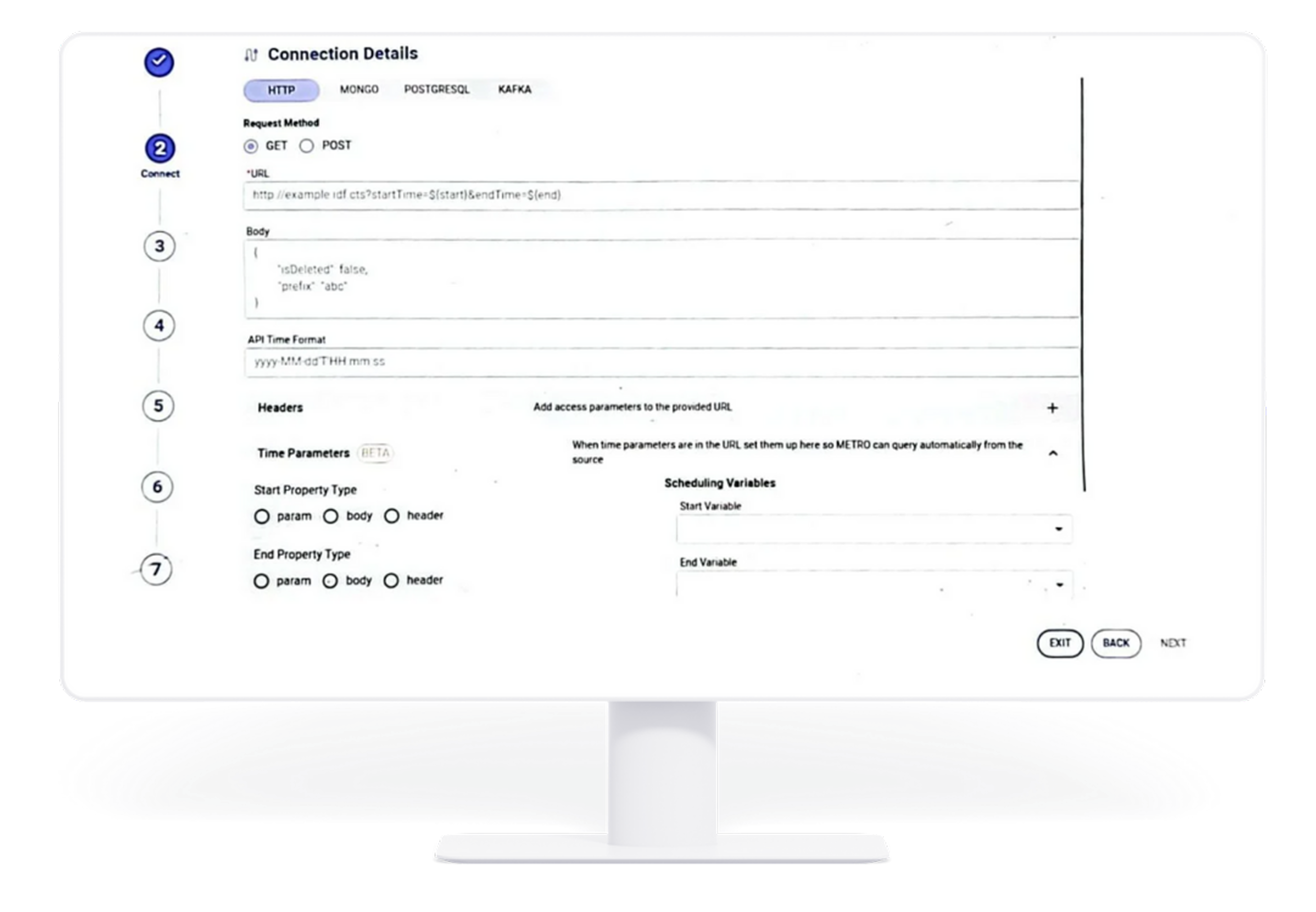
Metro streaming components were not user-friendly, adding friction at the most time-sensitive workflows.
The research conclusions translated into four design principles. These were not aspirational statements. They were constraints that governed every decision that followed.
Clear navigation and focused layouts so analysts work faster with less cognitive overhead.
Smart filters and auto-complete that anticipate intent, cutting discovery time in half.
Tabs and breadcrumbs for history, live data, and insights so users always know where they are.
Transparent reliability scores and active validation tests so analysts know when to trust a source.
Before a single pixel was drawn, I structured the information architecture. A fragmented search ordeal became a linear, seamless flow. Reducing cognitive load at every step was not a design preference. It was the entire point.


In a war room environment, visual noise is a liability. I crafted a brand rooted in tranquility and flow: water patterns, blue-purple gradients, and geometric symmetry. The goal was a system that signaled clarity even before the user read a single label.
Mood Board

Water patterns, blue-purple gradients, and geometric symmetry: the visual anchors of the Oasis brand.
The ripple-like “O” symbolizes data flow. Each module logo reflects its function: streaming lines for Metro, hexagons for Catalog, overlapping shapes for Mesh.

A shared component library and custom icon set gave the three modules a coherent visual grammar for the first time.

I identified four critical friction points in the legacy system. Each became a named design principle. Each principle produced a concrete UI pattern, traced directly to a user pain point.
Large touchpoints and a dark UI adapted to the war room remove glare so analysts focus on the data, not the screen.


Auto-complete anticipates intent, turning manual typing into one-click selection. AI search translates operational questions into curated source lists.

Breadcrumbs and tabs act as visual anchors across deep hierarchies. Analysts never lose context between Metro, Catalog, and Mesh.

The system does not hide errors. Clear health scores and active validation tests let users verify source integrity before committing to an analysis.


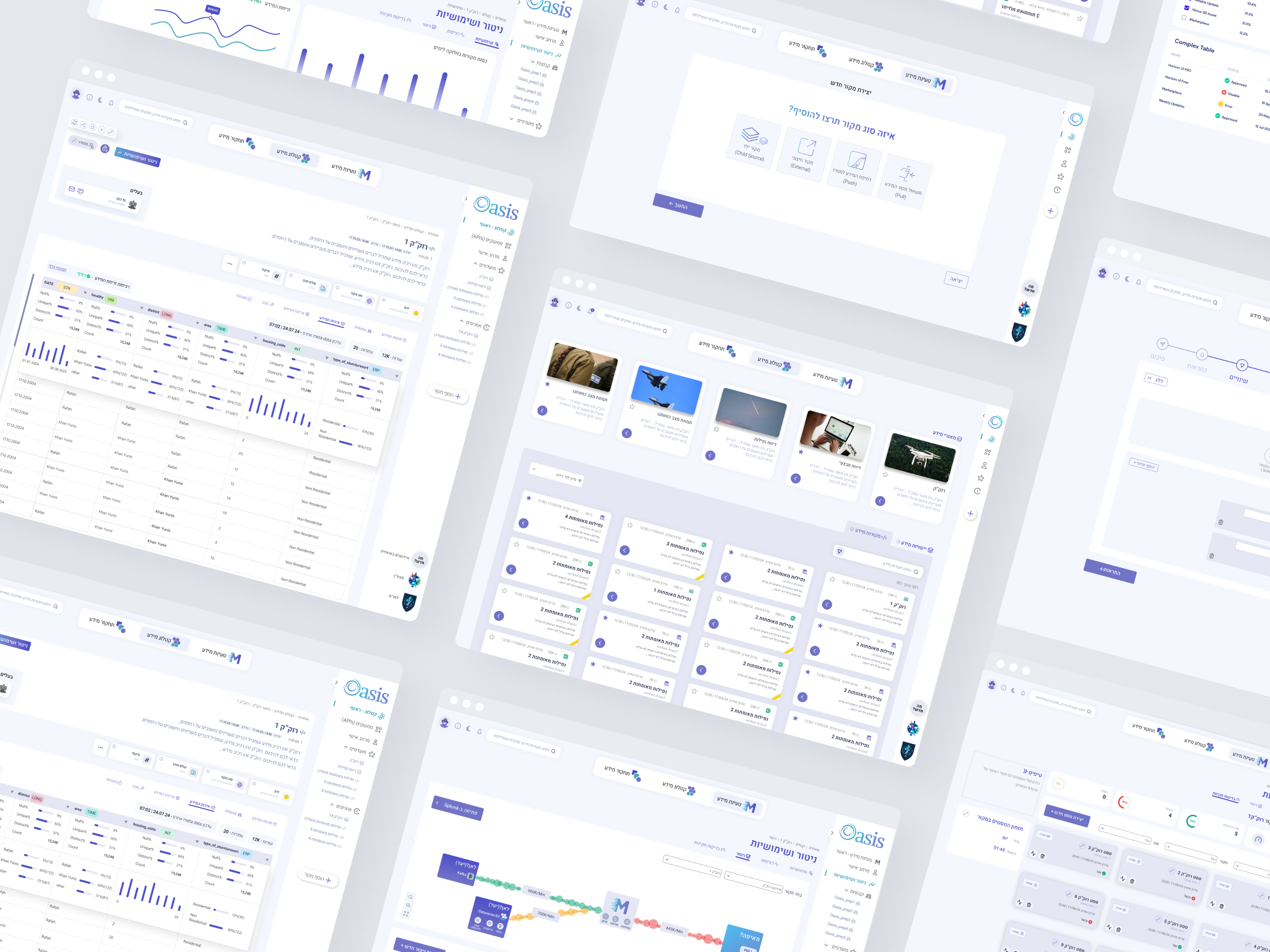
A cohesive experience spanning all three modules, unified for the first time by a shared design language and component library.
Oasis delivered a simple, accessible, real-time experience for military users. With my product management background, I balanced UX clarity with organizational constraints and produced outcomes leadership could point to.
50%
Fewer user errors through clearer workflows
35%
Faster access to critical information
30%
Better data flow, fewer support requests
Oasis was not a feature project. It was a systems project disguised as a design project. The lessons it produced shaped how I think about design leadership.
Three systems did not fail because of missing features. They failed because analysts had to rebuild their mental model at every module boundary. That is a design failure, and design had to fix it.
15 interviews gave me permission to cut complexity. Without evidence, stakeholders see every feature as essential. With it, you can prioritize ruthlessly and defend every removal.
In high-stress operational environments, visual calm is functional. The water-inspired brand was not decoration. It was the system telling users: you are in the right place, trust what you see.
A case study without outcomes is a process diary. Tying design decisions to 50% fewer errors and 35% faster access proves you understood the business, not just the interface.
More to love
